Lehrstuhl für Immunologie & Pathophysiologie

Founded in 2014, the CAM Lab at the Medical University of Graz has established itself as a research platform for preclinical biomedical studies. The laboratory utilizes the chorioallantoic membrane (CAM) of the developing chicken embryo as a versatile model system for investigating complex biological processes under physiologically relevant conditions.

The highly vascularized nature of the CAM enables the study of tumor growth, angiogenesis, tissue integration, and therapeutic interventions in a living biological environment. By bridging the gap between conventional cell culture and animal models, the CAM model provides an efficient tool for translational research.

Contact person

Nassim Ghaffari Tabrizi-Wizsy  
T: +43 316 385 71174

CAM Lab Research Unit – Before the Mouse Comes the Egg

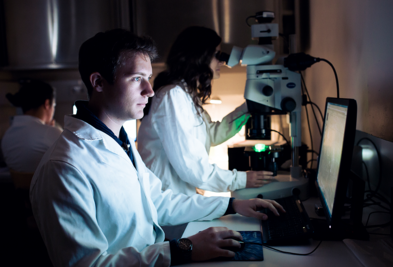
CAM Lab - Agnieszka/adobestock.com

Scientific Excellence in Accordance with the 3Rs Principles

The CAM model is a scientifically recognized alternative to animal experimentation and aligns with the principles of the 3Rs (Replacement, Reduction, and Refinement). It enables meaningful preclinical studies while contributing to the reduction of laboratory animal use.

Due to the absence of a fully developed immune system during early embryonic development, human tumor cells and patient-derived tissues can be successfully engrafted and investigated, providing valuable opportunities for translational and personalized research approaches.

CAM Lab

Cancer Research Under Physiological Conditions

Cancer research represents a major focus of the CAM Lab. The model allows the investigation of biological processes that cannot be adequately reproduced in conventional cell culture systems.

Current research applications include:

  • Tumor growth and progression
  • Angiogenesis and vascular remodeling
  • Tumor invasion and metastasis
  • Tumor microenvironment and extracellular matrix interactions
  • Evaluation of novel therapeutic approaches

The CAM platform enables the establishment of vascularized tumor models and facilitates the translation of in vitro findings into biologically relevant in vivo settings.

CAM Lab

Emerging Applications: Biomaterials and Implant Research

In addition to oncology, the CAM model is increasingly being explored for applications in biomaterials and implant research. Ongoing efforts focus on establishing standardized methods for the evaluation of novel materials and medical devices.

Potential applications include the assessment of:

  • Biocompatibility of biomaterials
  • Tissue integration of implants
  • Vascularization of engineered materials
  • Local tissue responses and regenerative processes

These developments expand the applicability of the CAM model beyond cancer research and support innovation in regenerative medicine and biomedical engineering.

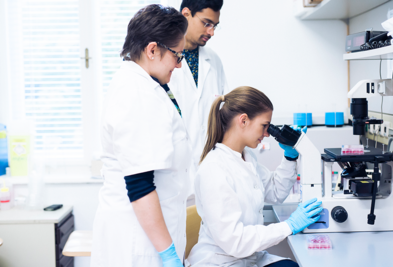
CAM Lab - TheWaterMeloonProjec/adobestock.com

Efficient, Reproducible, and Versatile

The CAM model offers a rapid, cost-effective, and highly reproducible experimental platform. Within a few days after implantation, transplanted cells can develop vascularized tissue structures suitable for a wide range of analyses.

Combined with histological, immunohistochemical, and imaging-based techniques, the CAM platform supports diverse research projects in oncology, drug development, regenerative medicine, and translational biomedical research. Through collaborations with clinical and scientific partners, the CAM Lab contributes to the development of innovative therapeutic and diagnostic strategies.

Laboratory Insight